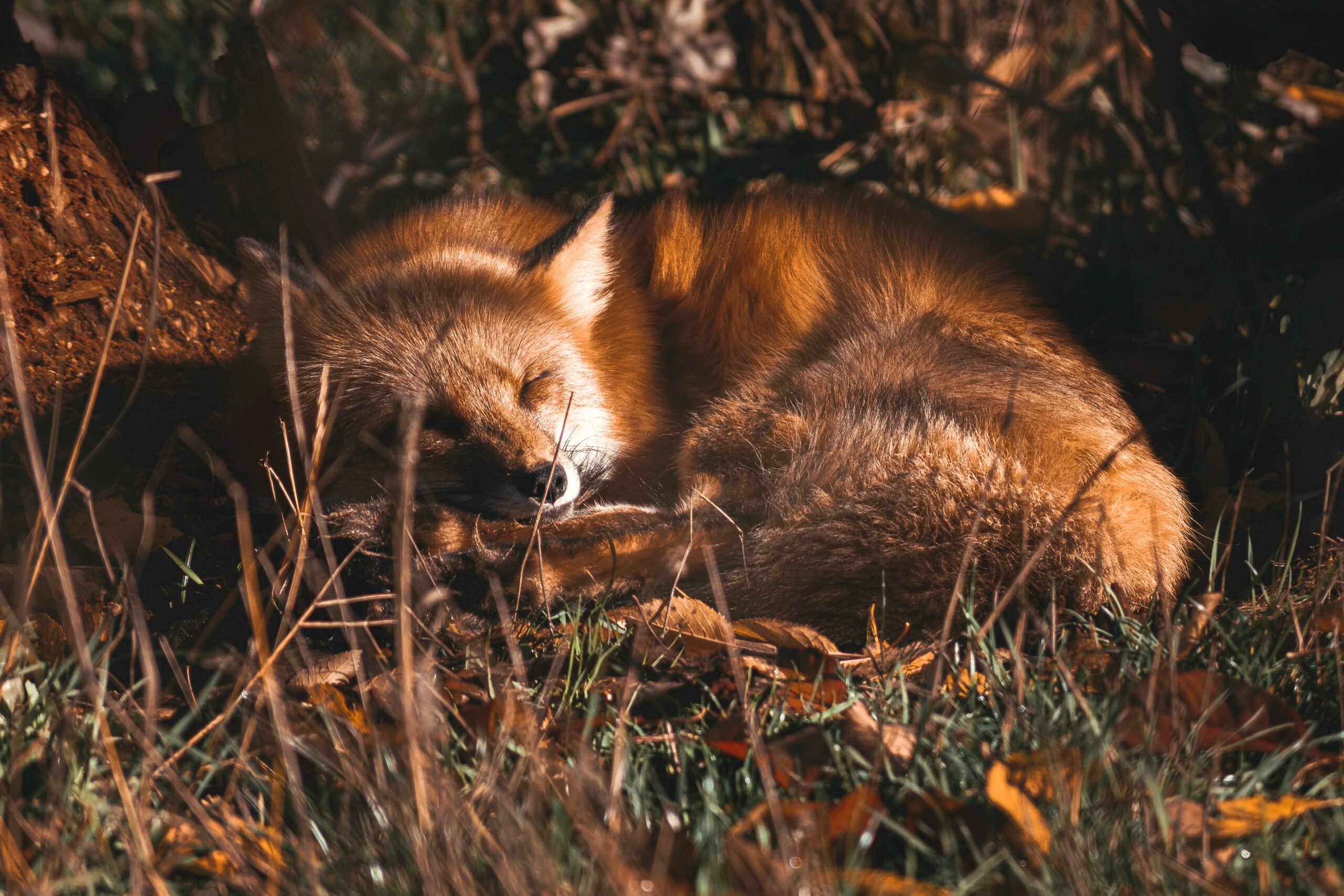
Foxes are most active during the evening, night, and early morning hours, which often leaves people wondering where they spend the rest of their time. If you regularly see foxes in your garden or neighbourhood after dark, it is natural to ask where they go to sleep during the day.
Despite their reputation as highly visible urban animals, foxes spend much of their resting time hidden from view. They seek out sheltered locations that provide protection from disturbance, weather, and potential threats. In towns and cities, these resting places can sometimes be surprisingly close to people without being noticed.
Understanding where foxes sleep can help explain their daily behaviour and reduce concerns about seeing foxes around homes and gardens.
Where Do Foxes Sleep? (Quick Answer)
Foxes usually sleep in sheltered, quiet locations during the day. They may rest in underground dens, dense vegetation, under sheds and decking, beneath bramble patches, or in other concealed places that provide safety and cover. Urban foxes often sleep surprisingly close to people while remaining largely unseen.
Do Foxes Sleep in Dens Every Day?
Not necessarily.
Many people assume foxes spend every day sleeping inside a den, but this is not usually the case.
Foxes use dens, often called earths, for specific purposes such as:
- raising cubs
- sheltering young foxes
- protection during severe weather
- resting when disturbance is high
For much of the year, adult foxes may simply rest above ground in a sheltered location.
A fox resting site might be:
- dense vegetation
- a patch of brambles
- long grass
- woodland cover
- sheltered garden corners
These locations often provide enough protection without requiring the fox to use an underground den.
Our guide on do foxes use the same den every year explains how foxes choose and reuse den sites over time.
Where Do Urban Foxes Sleep?
Urban foxes are highly adaptable and often use locations that people rarely notice.
Common urban resting places include:
- beneath sheds
- under decking
- dense shrubs
- overgrown gardens
- railway embankments
- abandoned structures
- patches of scrubland
The key requirement is usually shelter and privacy rather than complete isolation.
Many urban foxes live surprisingly close to people because towns and cities provide:
- food
- shelter
- warmth
- connected movement routes
A fox may be sleeping only a short distance from a house while remaining completely hidden from view.
Our article on why foxes are moving into UK towns and cities explains why urban areas have become such successful fox habitats.
Where Do Rural Foxes Sleep?
Rural foxes often have access to larger areas of natural habitat.
Common rural resting sites include:
- woodland edges
- hedgerows
- bramble thickets
- field margins
- earth banks
- underground dens
Because rural territories are often larger than urban territories, foxes may use several different resting locations within their range.
The exact location varies depending on:
- weather
- season
- food availability
- disturbance levels
Foxes generally choose locations that provide good visibility while remaining concealed.
Why Do Foxes Sleep During the Day?
Foxes are generally considered nocturnal or crepuscular animals.
This means they are most active:
- at dusk
- during the night
- around dawn
Sleeping or resting during daylight hours helps foxes avoid:
- human activity
- traffic
- disturbance
- excessive daytime heat
However, foxes do not follow a strict schedule.
It is not unusual to see a fox during the day, particularly if:
- food is available
- cubs need feeding
- weather conditions are favourable
- the fox feels safe
Our guide on where do foxes go during the day explores daytime fox behaviour in more detail.
Do Foxes Sleep Alone?
Sometimes, but not always.
Fox social behaviour varies depending on the season and the local fox population.
Adult foxes may:
- rest alone
- rest near a mate
- remain close to cubs
- share parts of a territory with family members
During the cub-rearing season, foxes often spend more time around den sites and family groups.
Outside the breeding season, resting arrangements can be more flexible.
Our article on do foxes live alone or in groups explains fox social structure in greater detail.
Do Foxes Sleep in Gardens?
Yes.
Gardens can provide attractive resting locations if they offer:
- shelter
- privacy
- vegetation cover
- limited disturbance
Foxes may rest in:
- overgrown corners
- beneath sheds
- under decking
- behind dense shrubs
- beneath garden structures
Many homeowners never realise a fox is resting nearby because foxes are generally quiet and inactive while sleeping.
A fox sleeping in a garden is not automatically a sign of a problem. In many cases, the animal is simply taking advantage of available cover within its territory.
Do Foxes Sleep Under Sheds and Decking?
Yes.
Spaces beneath sheds and decking are among the most common resting locations used by urban foxes.
These areas provide:
- shelter from weather
- concealment
- protection from disturbance
- stable temperatures
During cub-rearing season, such locations may occasionally be used as den sites.
However, many foxes simply use them as temporary resting places.
If access remains available and the area is quiet, foxes may return repeatedly.
Our guide on what attracts foxes to gardens explains why certain garden features appeal to foxes.
How Long Do Foxes Sleep?
Foxes do not usually sleep continuously for long periods in the way people often imagine.
Instead, they alternate between:
- sleeping
- resting
- remaining alert
Like many wild animals, foxes stay aware of their surroundings even while resting.
Research suggests foxes may spend several hours resting during the day, but activity patterns vary considerably depending on:
- season
- territory
- food availability
- weather
- breeding activity
A fox may wake frequently throughout the day before becoming fully active again in the evening.
Where Do Foxes Sleep During Winter?
Winter often coincides with the fox breeding season.
During colder months, foxes may place greater emphasis on sheltered resting sites.
Suitable locations include:
- underground dens
- sheltered banks
- thick vegetation
- structures that block wind and rain
The need for protection can increase during periods of severe weather.
However, foxes remain highly adaptable and continue using a variety of resting locations throughout the year.
Winter is also when many people notice increased fox activity and vocalisations.
Our article on why do foxes bark at night explains some of the communication behaviours that become more noticeable during this period.
Where Do Foxes Sleep When They Have Cubs?
Fox cubs are typically born underground in a den.
During the first weeks of life, cubs remain heavily dependent on the den for:
- warmth
- protection
- shelter
Adult foxes often spend more time near the den during this period.
As cubs grow older, they begin exploring outside and gradually spend more time above ground.
Den locations may include:
- earth banks
- under sheds
- beneath decking
- disused burrows
- dense cover
The exact location depends on what is available within the territory.
Our guide on when do foxes have cubs in the UK explains the fox breeding cycle in more detail.
Can You Tell If a Fox Is Sleeping Nearby?
Sometimes.
Possible signs include:
- repeated sightings in the same area
- flattened vegetation
- regular movement routes
- fox droppings nearby
- occasional daytime sightings
However, foxes are often extremely discreet.
Many people live close to fox resting sites without ever becoming aware of them.
The presence of a sleeping fox does not necessarily mean there is a permanent den nearby.
Should You Be Concerned If a Fox Sleeps in Your Garden?
In most situations, no.
Foxes generally prefer avoiding direct contact with people and spend much of their resting time hidden and inactive.
A fox resting in a garden is usually:
- temporary
- non-aggressive
- part of normal territory use
If you wish to discourage repeated visits, practical steps may include:
- reducing food sources
- limiting shelter opportunities
- blocking access beneath structures where appropriate
Any preventative measures should be carried out humanely and in accordance with UK wildlife laws.
Our guide on how to deter foxes legally in the UK explains appropriate approaches.
Common Questions
Do foxes sleep in the same place every day?
Not always. Foxes may use multiple resting locations within their territory and switch between them depending on conditions.
Do foxes sleep underground?
Sometimes. Foxes often use underground dens when raising cubs, during bad weather, or when extra protection is needed.
Do foxes sleep in gardens?
Yes. Gardens can provide shelter, privacy, and resting opportunities, particularly in urban areas.
Do foxes sleep during the day?
Most foxes rest or sleep primarily during daylight hours and become more active at dusk and throughout the night.
How close do foxes sleep to houses?
Urban foxes may rest surprisingly close to homes, often beneath sheds, decking, or dense vegetation.
Key Takeaways
- Foxes usually sleep or rest in sheltered, concealed locations during the day.
- Adult foxes do not always use underground dens outside the cub-rearing season.
- Urban foxes commonly sleep beneath sheds, decking, shrubs, and other hidden spaces.
- Foxes may use several different resting sites within a territory.
- Gardens can provide suitable sleeping locations if they offer shelter and privacy.
- A fox sleeping nearby is usually a normal part of urban wildlife behaviour rather than a cause for concern.
Sources and Guidance
- Wildlife Online – Comprehensive information on fox ecology, behaviour, resting habits, territories, and den use.
- The Mammal Society – Scientific overview of fox behaviour, habitat use, breeding, and ecology.
- The Wildlife Trusts – General guidance on fox behaviour and habitat preferences in the UK.
- Fox Project – Information on urban fox ecology, denning behaviour, and coexistence.
- RSPCA – Guidance on understanding fox behaviour around homes and gardens.
For more guidance on living alongside foxes, visit our fox guidance hub, where you can explore behaviour, prevention strategies, and UK wildlife law.
0 responses to “Where Do Foxes Sleep?”