Fox activity can change noticeably at certain times of year. Some homeowners see increased digging, hear more noise at night, or notice foxes returning more frequently to the same areas.
These changes are often linked to the fox breeding season.
Understanding when foxes have cubs in the UK can help explain this behaviour and prevent unnecessary concern.
When Do Foxes Have Cubs in the UK? (Quick Answer)
Foxes in the UK typically give birth between March and April. Cubs are born underground in dens and remain there for several weeks before emerging in late spring.
When Fox Breeding Season Begins
Fox breeding season usually starts in winter.
Mating typically occurs between December and February. During this time, foxes may become more vocal, and activity can increase as individuals search for mates and establish territories.
This is often when people begin hearing loud calls at night. Foxes may produce a range of vocalisations during the breeding season, including screams and barking used in communication and territorial behaviour.
Our guide to why do foxes scream at night explains how breeding behaviour influences these sounds, while our article on why do foxes bark at night explores another common fox call heard during this period.
When Cubs Are Born
After mating, female foxes (vixens) prepare a den where they will give birth.
Cubs are usually born between:
- March
- early April
Litters typically contain between 4 and 6 cubs, although this can vary.
Cubs are born blind and completely dependent on their mother.
For the first few weeks, they remain underground in the den while the vixen stays close and the male provides food.
Where Foxes Have Cubs
Foxes raise cubs in dens, often called “earths.”
In urban areas, these may be located:
- under sheds
- beneath decking
- in quiet corners of gardens
- along railway embankments or parks
These spaces provide shelter, warmth, and protection from disturbance.
If a fox repeatedly disappears under a structure, it may be using it as a den site.
Our guide to why foxes keep coming back to gardens explains why foxes return to the same locations during cub-rearing season. Foxes may also reuse familiar den sites across multiple years if conditions remain suitable, which we explain further in our article on do foxes use the same den every year.
When Cubs Leave the Den
Fox cubs usually begin emerging from the den in:
- late April
- May
At this stage, they are:
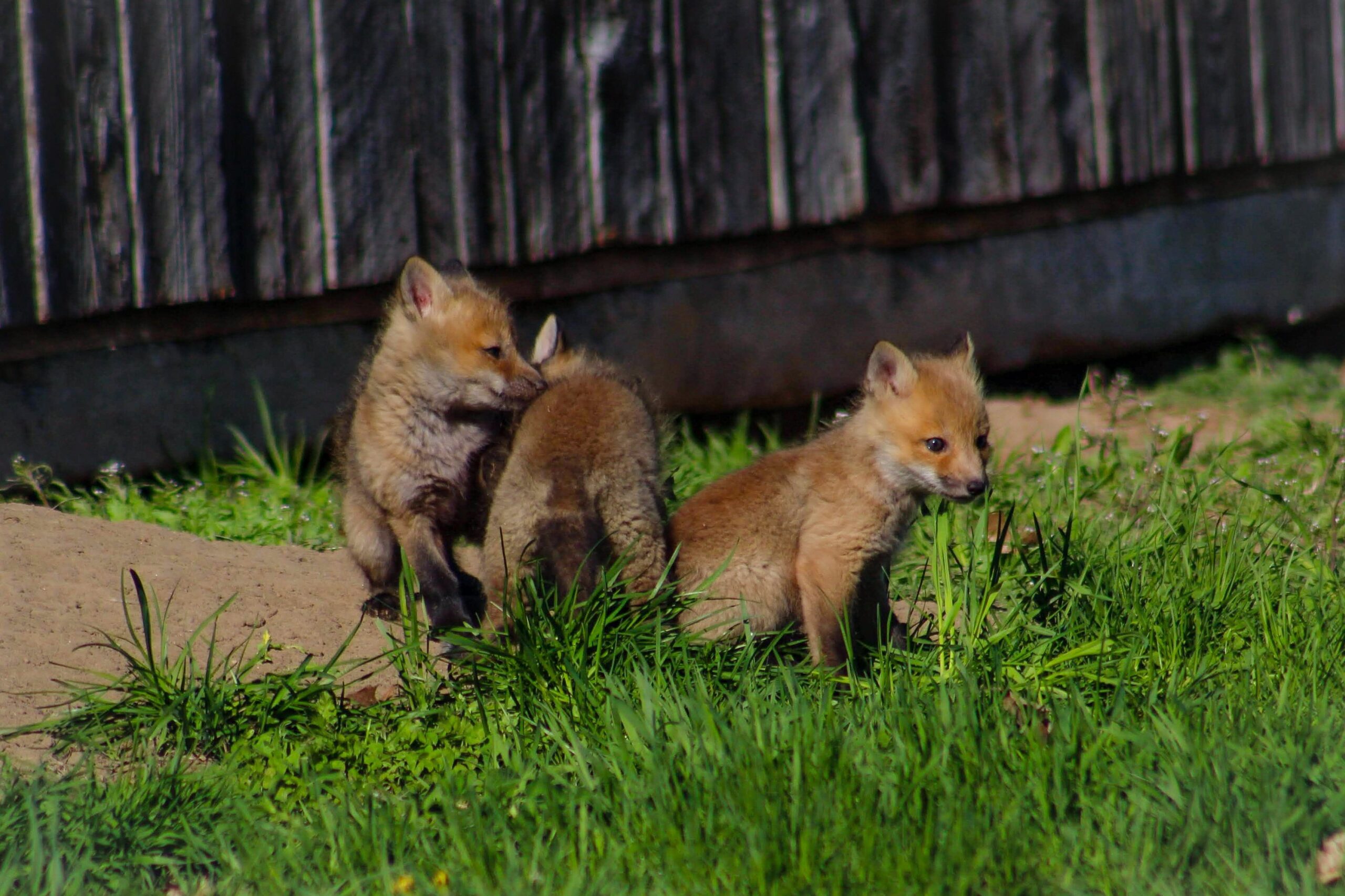
- small and playful
- more visible during daylight
- often seen near the den entrance
This is when many homeowners first realise foxes are living nearby.
The behaviour is temporary and part of normal development.
How Long Cubs Stay in the Area
Cubs remain close to the den throughout early summer.
As they grow:
- they begin exploring the surrounding area
- adults gradually reduce direct care
- activity in gardens may increase temporarily
By late summer and early autumn, young foxes begin to disperse and establish their own territories.
Our guide to why foxes are moving into UK towns and cities explains how this dispersal contributes to urban sightings.
Why Fox Activity Increases During Cub Season
Fox behaviour often changes during spring and early summer.
This can include:
- increased digging
- more frequent garden visits
- visible daytime activity
- carrying food back to dens
These behaviours are linked to raising cubs rather than aggression.
Adult foxes are gathering food and protecting their young.
Should You Be Concerned About Fox Cubs?
In most cases, no.
Foxes raising cubs are usually:
- focused on feeding their young
- avoiding unnecessary risk
- unlikely to interact with people
Seeing cubs in a garden can feel unusual, but it is usually temporary.
The family will move on naturally once the cubs are old enough.
What To Do If Foxes Are Denning in Your Garden
If a fox has made a den in your garden, the best approach is usually to wait.
Avoid:
- blocking the den entrance
- disturbing the area
- attempting to remove the animals
Cubs depend on access to the den. Blocking it can cause serious harm and may be unlawful.
Under UK law, actions that cause unnecessary suffering to wild animals may be considered an offence.
Our guide to how to deter foxes legally in the UK explains how to handle these situations responsibly.
How to Prevent Foxes Denning in Future
Prevention is most effective outside the breeding season.
Helpful steps include:
- blocking access under sheds and decking (when not in use)
- reducing quiet, undisturbed areas
- securing food sources
- maintaining garden boundaries
Timing matters.
Preventative work should ideally be carried out in autumn or early winter before breeding begins.
Our guide to preventing fox problems in UK gardens explains how to reduce the likelihood of denning.
Understanding Seasonal Fox Behaviour
Fox behaviour changes throughout the year.
The cub-rearing period is just one stage in a broader cycle that includes:
- winter breeding activity
- spring denning
- summer development
- autumn dispersal
Recognising these patterns helps explain why fox activity can appear to increase suddenly.
In most cases, these changes are temporary and part of normal wildlife behaviour.
Key Takeaways
- Foxes in the UK usually have cubs between March and April
- Cubs are born underground and emerge in late spring
- Increased fox activity in gardens is often linked to raising young
- Fox families typically move on naturally over time
- Prevention is most effective outside the breeding season
Frequently Asked Questions
What month do foxes have cubs in the UK?
Most fox cubs are born in March or early April.
When do fox cubs leave the den?
Cubs usually begin emerging from the den in late April or May.
How long do fox cubs stay with their parents?
Cubs remain with their parents through summer and begin dispersing in autumn.
Should I remove a fox den from my garden?
Only if it is clearly inactive. Disturbing an active den can harm cubs and may be unlawful.
Sources and Guidance
This article draws on wildlife research and UK guidance including:
- The Mammal Society – information on fox breeding cycles and behaviour
- The Wildlife Trusts – guidance on red fox ecology and seasonal behaviour
- RSPCA – advice on fox dens and urban wildlife interactions
- Research by Stephen Harris and Philip J. Baker on fox reproduction and urban ecology
For more guidance on living alongside foxes, visit our fox guidance hub, where you can explore behaviour, prevention strategies, and UK wildlife law.
0 responses to “When Do Foxes Have Cubs in the UK?”