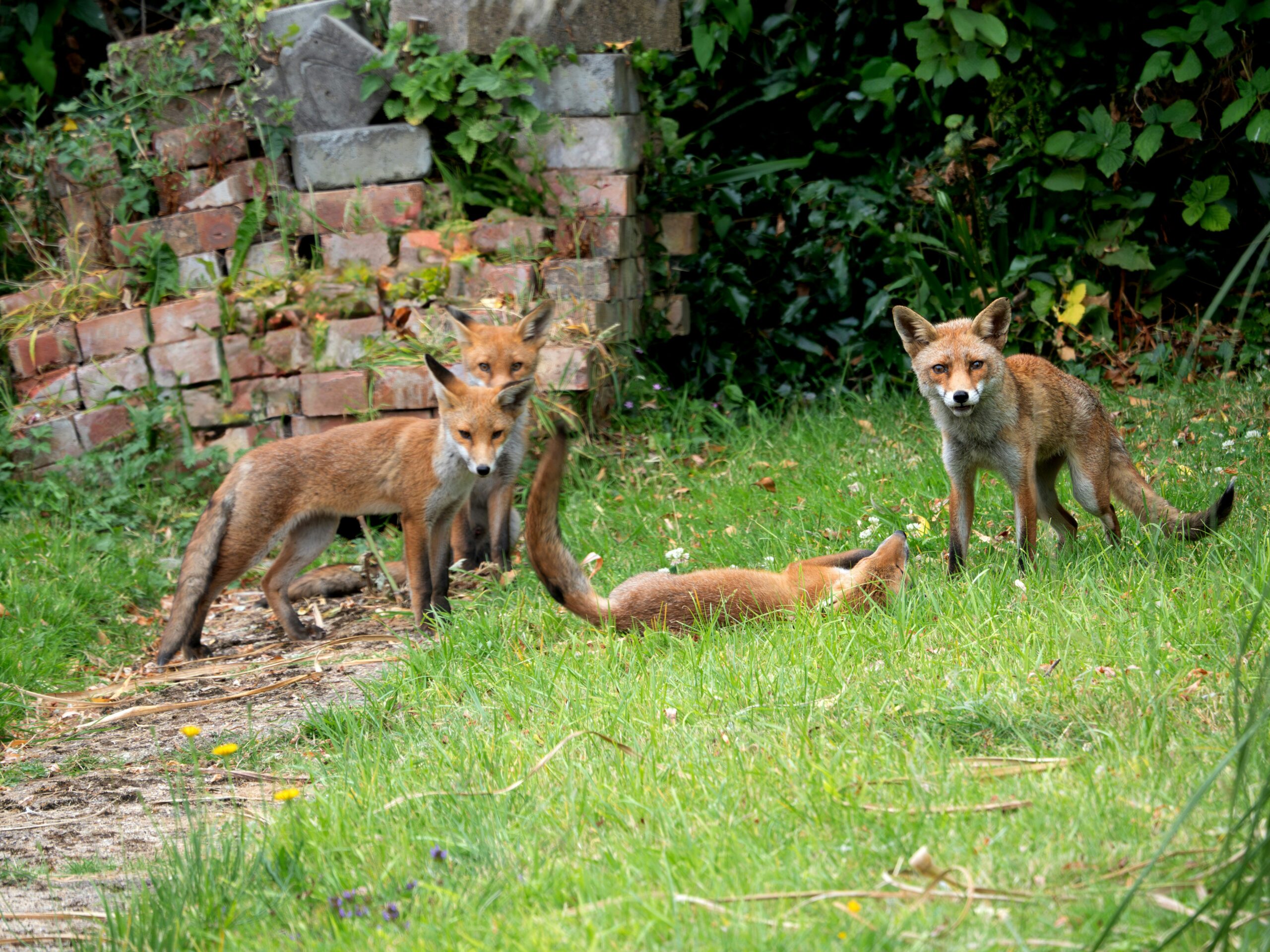
Foxes are often thought of as solitary animals because they are usually seen alone while hunting or moving through gardens at night. In reality, fox social behaviour is more flexible than many people realise.
In the UK, foxes commonly live either:
- alone
- as breeding pairs
- or in small family groups
Their social structure depends heavily on:
- food availability
- habitat
- territory quality
- competition from other foxes
Urban foxes are particularly adaptable and may tolerate living closer together than foxes in rural areas because food and shelter are easier to access.
Understanding how foxes organise themselves can help explain why several foxes sometimes appear in the same neighbourhood or garden.
Do Foxes Live Alone or in Groups? (Quick Answer)
Foxes in the UK do not always live alone. Although some foxes are solitary, many urban and rural foxes live in small family groups that share territory, shelter, and food resources. Group size varies depending on habitat, food availability, and the time of year.
How Do Foxes Organise Their Social Groups?
Foxes usually organise themselves around territories.
A territory may contain:
- an adult male fox
- an adult female fox
- cubs
- sometimes additional related foxes
The adult breeding pair are often the dominant foxes within the territory.
Other foxes in the group may include:
- older offspring
- subordinate adults
- younger foxes that have not yet dispersed
These group structures are more common in areas where food is plentiful, particularly in towns and cities.
Why Are Foxes Often Seen Alone?
Even foxes living in groups are frequently seen alone.
This is because foxes:
- often forage independently
- patrol territory separately
- rest in different locations
- move around at different times
A fox seen alone in a garden does not necessarily mean it lives alone.
Urban foxes especially may spread out across their territory while searching for food during the night.
Our guide on what time do foxes come out at night explains more about fox activity patterns.
Are Urban Foxes More Social?
In many cases, yes.
Urban foxes often live at higher population densities because:
- food is easier to find
- shelter is more available
- gardens create safe movement routes
This can allow several foxes to share relatively small territories.
In some urban areas, fox family groups may remain stable for long periods if:
- food remains reliable
- disturbance is limited
- territory competition is manageable
This is one reason foxes repeatedly appear in the same streets and gardens.
Our article on how big is a fox territory in the UK explains how fox territories work in more detail.
Do Rural Foxes Live Differently?
Rural foxes are often more dispersed.
In countryside areas:
- food is spread over larger distances
- territories are usually bigger
- fox population density may be lower
As a result, rural foxes are more likely to:
- travel further
- spend time alone
- maintain larger movement ranges
However, rural foxes can still form breeding pairs or family groups, especially during cub-rearing season.
What Happens When Young Foxes Grow Up?
Young foxes eventually leave their birth territory in a process called dispersal.
This usually happens once they reach maturity.
Dispersing foxes leave to:
- find mates
- establish new territory
- avoid competition within the family group
Some foxes travel considerable distances during dispersal, while others settle nearby if suitable habitat exists.
This movement helps explain why foxes occasionally appear suddenly in unfamiliar areas.
Do Foxes Share Dens?
Yes, particularly during breeding season.
Fox dens, often called earths, are mainly used:
- for raising cubs
- during severe weather
- for temporary shelter
A breeding female and her cubs commonly share a den, while other group members may remain nearby within the territory.
Foxes do not necessarily sleep together every night and often rest separately once cubs become older.
Our guide on where do foxes go during the day in the UK explains where foxes commonly rest.
Do Foxes Cooperate With Each Other?
Foxes are not highly cooperative in the same way as animals such as wolves, but some group coordination does occur.
Fox family members may:
- defend territory together
- tolerate shared feeding areas
- assist indirectly with cub survival
- communicate using scent and vocalisations
Social behaviour varies considerably between different fox populations.
In urban environments, tolerance between related foxes is often higher because food is more abundant.
Why Might Several Foxes Visit the Same Garden?
Multiple foxes may visit the same garden if it falls within a shared territory.
Common attractants include:
- food sources
- compost
- water
- shelter
- safe movement routes
Gardens can become regular stopping points within nightly fox routines.
If visits are becoming disruptive, practical prevention methods can help reduce activity without harming wildlife.
Our guide on fox-proofing your garden explains humane ways to make gardens less attractive to foxes.
Are Foxes Territorial With Other Foxes?
Yes.
Foxes usually defend territories against unrelated foxes.
Territorial behaviour may involve:
- scent marking
- vocalisations
- chasing
- occasional fighting
This behaviour is often more noticeable:
- during breeding season
- where territories overlap
- when food availability is limited
Fox screams heard at night are sometimes linked to territorial disputes.
Our article on why do foxes scream at night explains this behaviour further.
Do Foxes Prefer Living Alone or in Groups?
There is no single answer because fox social behaviour is highly adaptable.
Foxes adjust their behaviour according to:
- habitat
- food supply
- population density
- breeding opportunities
In areas with plentiful food and shelter, group living may provide advantages.
In harsher or less productive environments, foxes may spend more time alone.
This flexibility is one reason foxes have adapted so successfully to urban life in the UK.
How to Reduce Repeat Fox Activity Around Your Property
Whether foxes live alone or in groups, repeated visits to gardens are usually linked to reliable resources.
Helpful steps include:
- securing bins
- removing accessible food
- reducing shelter opportunities
- blocking access under sheds or decking
- clearing fallen fruit
Consistency is important because foxes quickly learn whether an area remains rewarding.
Our guide on how to deter foxes legally in the UK explains practical and humane prevention methods.
Common Questions
Do foxes live together in families?
Yes. Many foxes live in small family groups, particularly in urban areas where food and shelter are abundant.
Why do I see more than one fox in my garden?
Multiple foxes may belong to the same family group or territory and may use the same movement routes each night.
Do foxes hunt together?
Foxes usually hunt alone, even when living within family groups.
Are urban foxes more social than rural foxes?
Urban foxes often tolerate living closer together because resources are concentrated within smaller areas.
Do foxes stay with the same mate for life?
Foxes can form long-term breeding pairs, although pair bonds and territory structures may change over time.
Key Takeaways
- Foxes in the UK may live alone, as breeding pairs, or in small family groups.
- Urban foxes are often more social because food and shelter are concentrated.
- Foxes are commonly seen alone even when they belong to a group.
- Young foxes eventually leave their birth territory to find mates and establish new territory.
- Several foxes may use the same garden if it lies within a shared territory.
- Humane prevention methods can help reduce repeated fox activity around properties.
Sources and Guidance
- The Mammal Society – UK overview of red fox behaviour, social structure, habitat use, and ecology.
- Wildlife Online – Detailed explanation of fox family groups, territorial behaviour, dispersal, and urban social organisation.
- The Wildlife Trusts – Educational information about fox behaviour, breeding, habitat, and feeding patterns.
- Fox Project – Information about urban fox populations, family groups, and coexistence with people in UK towns and cities.
- RSPCA – Guidance on fox behaviour, urban sightings, and humane conflict reduction.
- Natural England – Background information about wildlife ecology, habitat pressures, and coexistence principles in the UK.
For more guidance on living alongside foxes, visit our fox guidance hub, where you can explore behaviour, prevention strategies, and UK wildlife law.
0 responses to “Do Foxes Live Alone or in Groups?”