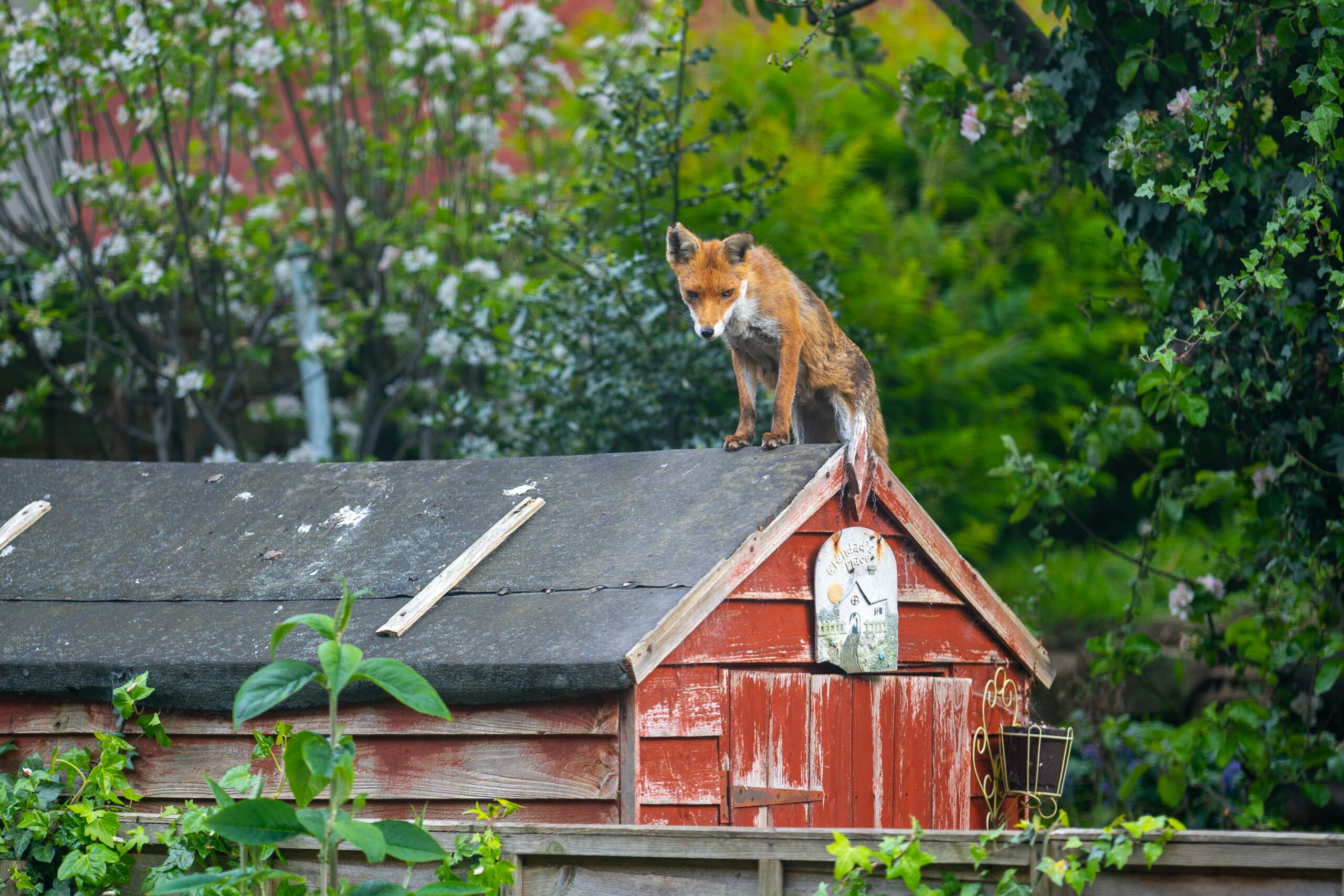
Urban foxes are highly adaptable animals that regularly move through gardens, parks, and residential areas in search of food, shelter, and safe routes around their territory.
Many homeowners assume that a fence will prevent foxes entering a garden. However, foxes are surprisingly agile and are often capable of climbing, jumping, or finding alternative ways around garden boundaries.
Understanding how foxes access gardens can help explain repeated visits and allow homeowners to focus on practical, humane ways to reduce unwanted activity.
Can Foxes Climb Fences? (Quick Answer)
Yes, foxes can climb many types of fences, particularly those that provide grip, footholds, or nearby structures that help them gain height. They are also capable jumpers and may clear lower fences without climbing at all. While fences can reduce access, they are rarely enough on their own to keep foxes out if food, shelter, or other attractions are present.
Can Foxes Climb Fences?
Although foxes are not specialist climbers like cats or squirrels, they are far more agile than many people realise.
Urban foxes frequently encounter walls, fences, sheds, gates, and other obstacles as they move through their territory. Over time, they learn how to navigate these features efficiently.
Depending on the fence design, a fox may:
- climb over it directly
- scramble up rough surfaces
- use nearby objects to gain height
- jump onto the top before dropping down
- find gaps underneath or around it
This adaptability is one reason foxes are so successful in urban environments.
In many cases, a homeowner may believe a fox has climbed a fence when it has actually entered using an easier route elsewhere.
How High Can a Fox Jump?
Foxes are powerful jumpers.
While there is no exact maximum height that applies to every fox, healthy adult foxes can often clear obstacles of around 1.5 to 2 metres when sufficiently motivated.
The likelihood of a successful jump depends on factors such as:
- the fox’s age and condition
- the available take-off space
- weather conditions
- the presence of nearby structures
Many standard UK garden fences fall within this height range.
As a result, foxes may be able to enter gardens without climbing at all.
What Types of Fences Can Foxes Climb?
Some fences are much easier for foxes to negotiate than others.
Wooden Fences
Traditional timber fences often provide plenty of grip.
Features that assist climbing include:
- rough surfaces
- horizontal support rails
- narrow gaps
- uneven boards
A fox may be able to scramble over these fences relatively easily.
Wire Mesh and Chain-Link Fencing
Wire fencing is often one of the easiest types for foxes to climb.
The mesh acts almost like a ladder, providing multiple points of grip.
This is why wire fencing alone is often ineffective at preventing fox access.
Trellis Panels
Foxes can sometimes use trellis structures to gain height.
Although a trellis may not support a fox’s full weight in the same way as a fence, it can provide enough grip to assist climbing.
Composite and Smooth Fencing
Smooth modern fencing is generally more difficult for foxes to climb because it offers fewer footholds.
However, nearby structures can still make access possible.
Can Foxes Climb Walls?
Yes.
Foxes can often climb or jump onto lower brick walls, particularly if the surface provides grip or if nearby objects help them gain height.
Walls become easier to access when located near:
- sheds
- bins
- raised flower beds
- garden furniture
- retaining walls
A wall that appears secure may therefore be less effective than expected.
How Else Do Foxes Get Into Gardens?
Focusing only on climbing can sometimes overlook the real issue.
Foxes are extremely resourceful and may access gardens by:
- squeezing through gaps in fencing
- entering through open gates
- digging beneath boundaries
- crossing neighbouring properties
- using sheds, walls, and other structures as stepping stones
This is one reason repeated fox visits do not necessarily indicate a problem with the fence itself.
Why Do Foxes Enter Gardens?
The more important question is often not whether foxes can climb fences, but why they want to enter a garden in the first place.
Foxes are usually attracted by resources.
Common attractants include:
- food waste
- accessible bins
- bird food
- fallen fruit
- compost heaps
- water sources
- dense vegetation
- sheltered resting areas
Our guide on what attracts foxes to gardens explains these attractants in more detail.
If a garden consistently provides food or shelter, a fox may continue visiting regardless of fence height.
Do Foxes Use the Same Routes Repeatedly?
Yes.
Foxes often follow familiar routes through their territory.
These routes may include:
- fence lines
- hedgerows
- alleyways
- railway embankments
- garden boundaries
Once a fox discovers a reliable way to move through an area, it may continue using that route for months or even years.
This can make it seem as though a particular fox is deliberately targeting a specific garden when it is simply following an established travel route.
Our guide on how big a fox territory is in the UK explains how foxes use and move around their range.
Can a Fence Stop Foxes Completely?
In most situations, no.
A fence may reduce access, but it is rarely a complete solution.
Foxes are adaptable animals and often find alternative routes when motivated by food or shelter.
This is particularly true in urban environments where gardens are connected through a network of fences, walls, sheds, and neighbouring properties.
The most effective approach combines physical barriers with measures that make the garden less attractive overall.
How to Make Your Garden Less Accessible to Foxes
If fox visits are causing concern, focus on practical and humane prevention.
Useful measures include:
Secure Food Sources
Ensure that:
- bins are closed securely
- pet food is not left outdoors
- bird food is stored appropriately
- fallen fruit is removed
Reduce Shelter Opportunities
Foxes are more likely to remain in areas that provide cover.
Consider:
- managing overgrown vegetation
- blocking access beneath sheds
- securing decking voids
Maintain Garden Boundaries
Inspect fences regularly for:
- damaged panels
- gaps beneath fencing
- weak points around gates
Although boundaries may not stop every fox, they can help reduce access opportunities.
Remove Unintentional Attractants
Many gardens provide resources without homeowners realising.
Our guide on fox-proofing your garden explains how to identify and reduce these attractants.
Are Foxes Climbing Fences a Cause for Concern?
Usually not.
Climbing fences is a normal part of urban fox behaviour.
In most cases, a fox crossing a fence simply reflects how it moves through its territory.
The presence of a fox does not necessarily indicate aggression, denning activity, or a developing problem.
However, repeated visits may suggest that the garden contains resources the fox finds useful.
Understanding these attractants is often more effective than focusing solely on the fence itself. Our guide on how to get rid of foxes in the garden explains the practical, humane measures that can help make gardens less attractive to visiting foxes.
Common Questions
Can foxes climb six-foot fences?
Yes. Foxes can often overcome fences around six feet (approximately 1.8 metres) high through climbing, jumping, or by using nearby structures.
Can foxes climb wooden fences?
Yes. Wooden fences often provide sufficient grip and footholds for foxes to scramble over.
Can foxes climb smooth fences?
Smooth surfaces are generally more difficult to climb, but foxes may still gain access using nearby objects or alternative routes.
Can foxes climb garden walls?
Yes. Foxes can often scale lower walls or jump onto them from nearby structures.
Will a taller fence keep foxes out?
A taller fence may reduce access but is unlikely to provide complete exclusion. Removing food and shelter attractants is usually more effective.
Can foxes climb into gardens to attack pets?
Foxes generally enter gardens to search for food, shelter, or travel routes rather than to seek conflict with pets. Our guide on are foxes dangerous to pets in the UK explains these risks in more detail.
Key Takeaways
- Foxes can climb many types of fences, particularly those with rough surfaces or footholds.
- They are also capable jumpers and may clear lower fences without climbing.
- Wire mesh fencing is often easier for foxes to negotiate than solid fencing.
- Foxes may also access gardens through gaps, open gates, or neighbouring properties.
- Food, shelter, and safe travel routes are the main reasons foxes enter gardens.
- Physical barriers work best when combined with humane prevention measures.
- Reducing attractants is usually more effective than relying on fence height alone.
Sources and Guidance
- The Mammal Society – Overview of red fox behaviour, ecology, movement patterns, and adaptation to urban environments.
- RSPCA – Guidance on living alongside urban foxes, including practical advice for reducing conflict and managing fox activity around homes.
- The Wildlife Trusts – Species information covering fox behaviour, habitat use, feeding habits, and their role in UK ecosystems.
- Wildlife and Countryside Act 1981 – UK legislation covering wildlife protection and the legal framework relevant to humane fox management.
For more guidance on living alongside foxes, visit our fox guidance hub, where you can explore behaviour, prevention strategies, and UK wildlife law.
0 responses to “Can Foxes Climb Fences? Understanding Urban Fox Agility in the UK”