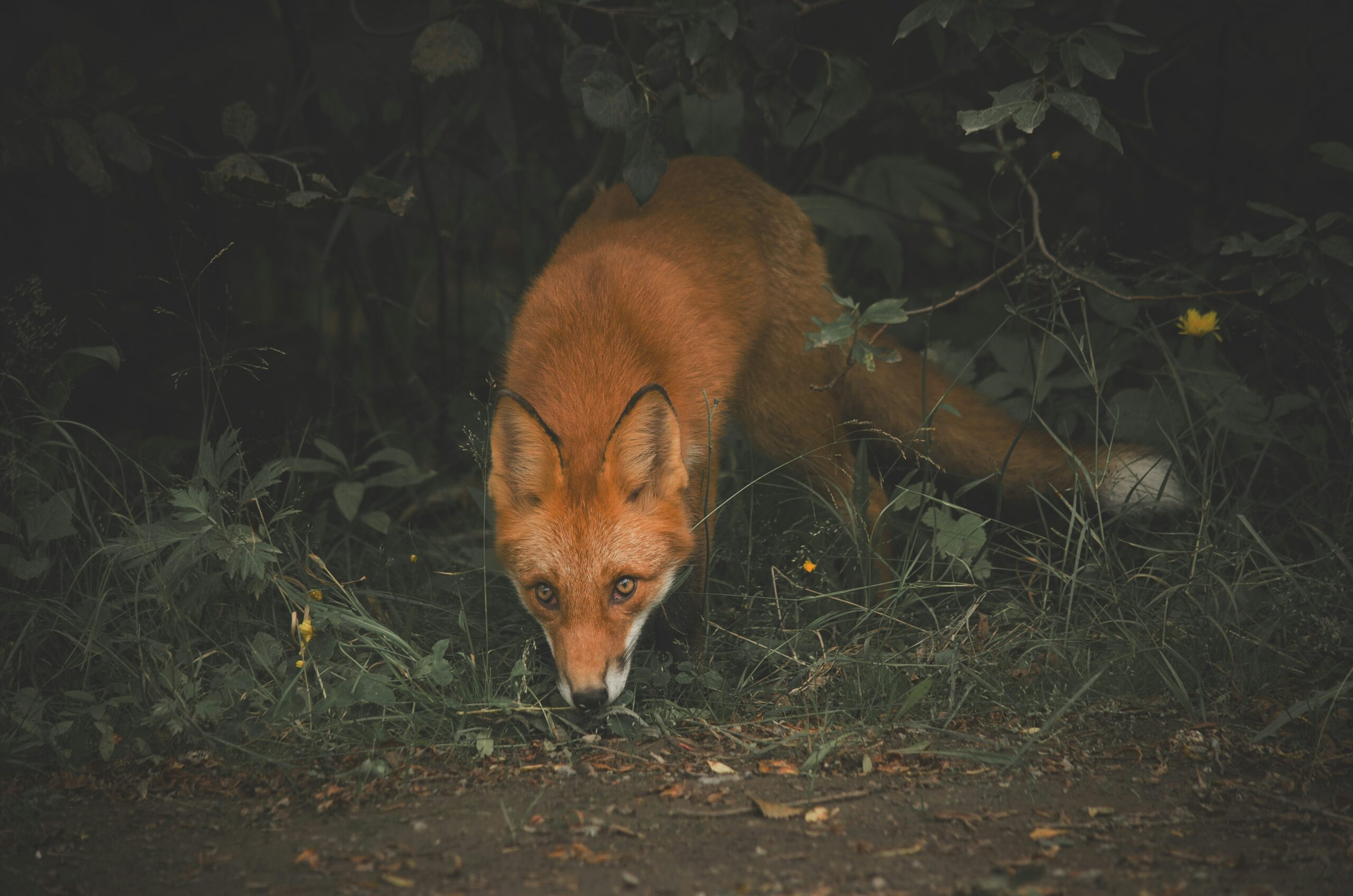
Urban foxes are most active after dark, which is why many people first notice them late in the evening or hear them during the night. Seeing a fox at night is completely normal and usually reflects their natural behaviour rather than aggression or unusual activity.
Foxes are primarily nocturnal or crepuscular animals, meaning they are most active during the evening, night, and early morning hours. In towns and cities, they often adjust their routines around human activity, becoming more confident once streets and gardens are quieter.
Understanding when foxes are active can help explain common experiences such as nighttime screaming, sightings in gardens, or repeated visits to the same area.
What Time Do Foxes Come Out at Night? (Quick Answer)
Foxes in the UK usually become active around dusk and remain active throughout the night, particularly between late evening and the early hours of the morning. In urban areas, foxes often emerge shortly after sunset when streets become quieter and human activity decreases.
When Do Foxes Usually Become Active?
In most parts of the UK, foxes begin emerging around dusk.
During spring and summer, this may be quite late in the evening due to longer daylight hours. In autumn and winter, fox activity may begin much earlier because darkness arrives sooner.
Urban foxes often wait until:
- pedestrian activity decreases
- gardens become quiet
- bins are left out overnight
- roads become less busy
This behaviour helps foxes avoid conflict and move around more safely.
Many sightings happen between:
- 8pm–12am in summer
- 5pm–10pm in winter
However, foxes may remain active throughout the night, especially in areas with reliable food sources. Although foxes are most often seen after sunset, there are several reasons they prefer nighttime activity. Why are foxes more active at night? explores how darkness helps foxes travel, forage, and avoid disturbance.
Why Are Foxes Active at Night?
Foxes are naturally adapted to nighttime activity.
Being active after dark helps them:
- avoid humans
- avoid traffic and disturbance
- search for food more safely
- move between territories unnoticed
Urban environments can actually benefit foxes at night because:
- streets are quieter
- gardens are accessible
- discarded food becomes easier to find
This is also why foxes are commonly seen crossing roads, sitting quietly in gardens, or exploring residential areas late in the evening.
If foxes repeatedly visit your garden at night, it is usually because they associate the area with food, shelter, or safety. Our guide on why foxes keep coming back to my garden explain this behaviour in more detail.
What Time Are Foxes Most Active?
Fox activity often peaks during:
- dusk
- the middle of the night
- just before sunrise
The exact timing varies depending on:
- season
- weather
- food availability
- human activity nearby
Urban foxes tend to become more cautious in busy areas and may wait until very late at night before appearing.
In quieter suburbs or rural areas, they may emerge earlier in the evening because there is less disturbance.
Why Do Foxes Scream at Night?
One reason people become aware of foxes at night is their vocalisations.
Fox screams are most common:
- during mating season
- during territorial disputes
- when adults communicate with cubs
These sounds can seem alarming, especially late at night, but they are a normal part of fox behaviour.
Nighttime activity also increases fox vocal communication, particularly during the breeding season. Our guide on why foxes scream at night explains the different types of fox calls and why they happen.
Is It Normal to See Foxes During the Day?
Yes. Although foxes are most active at night, daytime sightings are not automatically a cause for concern.
Foxes may appear during the day because:
- they are feeding cubs
- they have become used to people
- food is available
- they were disturbed from a resting place
A healthy fox seen during daylight is usually behaving normally.
However, signs such as disorientation, severe injury, or inability to move properly may indicate illness or injury.
Our article on where do foxes go during the day explains where foxes typically rest between periods of activity.
Are Foxes Dangerous at Night?
In most cases, no.
Foxes generally avoid people and are far more interested in finding food or moving through their territory than approaching humans.
Nighttime activity can sometimes make foxes appear bolder simply because:
- there are fewer people around
- gardens are quieter
- artificial lighting can make encounters feel unexpected
But seeing a fox at night is not usually a sign of danger.
Our guide on are foxes dangerous to humans in the UK explains when concern may be appropriate and when behaviour is normal.
Why Do Foxes Visit the Same Gardens at Night?
Foxes are creatures of habit and often follow regular routes through their territory.
A garden may attract repeated nighttime visits if it contains:
- accessible food
- uncovered bins
- compost
- dense shelter
- ponds or water sources
Some foxes also use gardens as safe pathways between resting and feeding areas. Many urban foxes repeatedly use the same travel routes, particularly when they provide safe and reliable access through a territory. Why do foxes follow the same route every night? explores how these established movement patterns develop.
If visits become disruptive, practical prevention methods can help reduce repeat activity without harming wildlife. Our guide on how to deter foxes legally in the UK explains safe and humane approaches.
How to Reduce Nighttime Fox Activity in Your Garden
You cannot completely prevent foxes from passing through an area, but you can make gardens less attractive to them.
Helpful steps include:
- securing bins
- removing accessible food
- clearing fallen fruit
- reducing shelter under decking or sheds
- using motion-activated lighting where appropriate
Consistency is important because foxes quickly learn whether an area remains accessible or rewarding.
If digging is becoming a problem, our guide on how to stop foxes digging up your lawn explains additional preventative measures.
Key Takeaways
- Foxes in the UK are usually most active between dusk and dawn.
- Urban foxes often emerge after sunset once streets and gardens become quieter.
- Seeing a fox at night is normal behaviour and does not usually indicate aggression.
- Fox activity patterns can vary depending on season, food availability, and human disturbance.
- Repeated nighttime visits to gardens are often linked to food, shelter, or safe movement routes.
- Humane prevention methods can help reduce unwanted fox activity without harming wildlife.
Common Questions
Do foxes come out every night?
Foxes are usually active every night, although they may not always visit the same locations daily. Their movements depend on food, territory, and disturbance levels.
What time are foxes most active in UK cities?
Urban foxes are commonly most active between late evening and the early hours of the morning when streets are quieter and human activity is lower.
Why do foxes suddenly appear at night?
Foxes often emerge once areas become quieter after sunset. Increased nighttime sightings usually reflect normal activity patterns rather than unusual behaviour.
Do foxes sleep during the day?
Foxes usually rest during the daytime in dense vegetation, sheltered spaces, or underground dens before becoming active again later in the evening.
Should I worry if I see a fox at night?
In most cases, no. Foxes generally avoid people and nighttime sightings are considered normal behaviour in both urban and rural areas.
Sources and Guidance
- The Mammal Society – Overview of red fox behaviour, habitat use, activity patterns, and urban adaptation in the UK.
- Wildlife Online – Detailed explanation of fox activity patterns, nocturnal behaviour, territorial movement, and urban ecology.
- RSPCA – Guidance on living alongside foxes, normal behaviour, and humane approaches to reducing conflict.
- The Wildlife Trusts – General educational information about fox behaviour, habitat, feeding, and activity.
- Fox Project – Information about urban fox behaviour, public concerns, and practical coexistence guidance.
- Natural England – Background information on UK wildlife management, urban ecology, and responsible coexistence principles.
For more guidance on living alongside foxes, visit our fox guidance hub, where you can explore behaviour, prevention strategies, and UK wildlife law.
0 responses to “What Time Do Foxes Come Out at Night?”