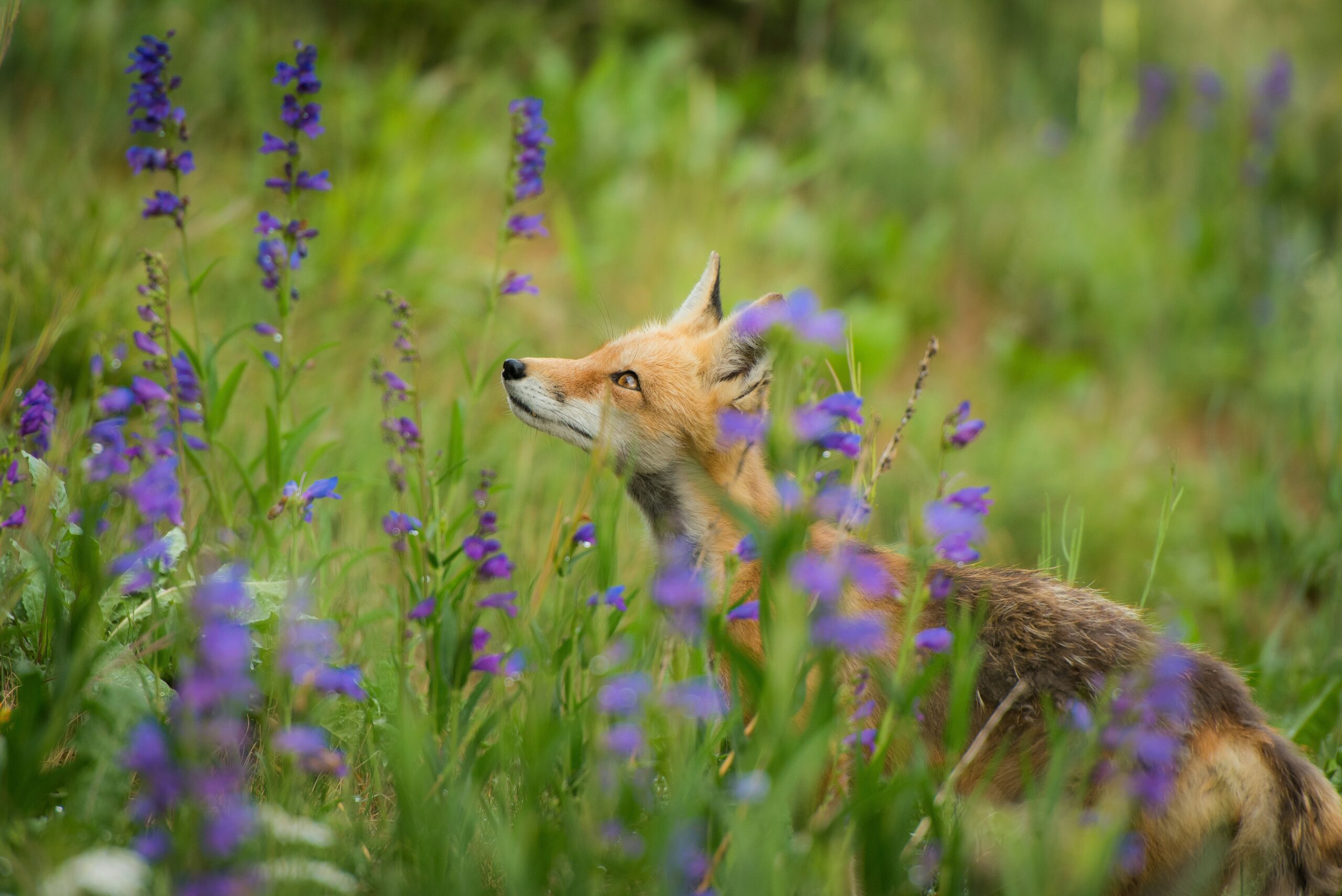
Foxes rely heavily on their sense of smell to understand the world around them.
Long before a fox sees or hears a person, it may already know someone is nearby through scent carried on the wind or left behind on the ground. This ability helps foxes avoid danger, locate food, recognise familiar places, and move safely through their territory.
Many people wonder whether foxes can smell humans and, if so, how much information they can gather.
The answer is yes.
Although foxes do not interpret scent in exactly the same way humans recognise faces, their highly developed sense of smell allows them to detect people and distinguish between different smells in remarkable detail.
Understanding how foxes use scent helps explain why they often avoid people before being seen and why they sometimes appear to know someone is approaching long before they come into view.
Can Foxes Smell Humans? (Quick Answer)
Yes. Foxes have an excellent sense of smell and can detect human scent from considerable distances, depending on the wind, weather, and surrounding environment. They use scent to detect people, identify familiar areas, locate food, and assess potential risks.
How Good Is a Fox’s Sense of Smell?
A fox’s sense of smell is one of its most important survival tools.
Like domestic dogs, foxes possess millions of scent receptors that allow them to detect odours far more effectively than humans.
This enables them to:
- locate food hidden beneath vegetation or snow
- detect other foxes
- identify territorial scent markings
- recognise changes within their environment
- detect nearby people and other animals
Although hearing and vision are also important, smell often provides the first indication that something nearby has changed.
Can Foxes Smell Humans?
Yes.
Foxes regularly detect human scent while moving through towns, cities, and the countryside.
Every person leaves behind scent through:
- skin cells
- sweat
- clothing
- footwear
- objects they have touched
Foxes can detect many of these scent traces and use them to judge whether people are nearby or have recently passed through an area.
Rather than identifying someone by name or appearance, a fox is assessing whether the scent is familiar, recent, or associated with previous experiences.
How Far Away Can a Fox Smell a Human?
There is no fixed distance.
How far a fox can detect human scent depends on several factors, including:
- wind direction
- humidity
- temperature
- vegetation
- surrounding terrain
- the strength of the scent
A person standing upwind may be detected much farther away than someone approaching from downwind.
Similarly, damp air often carries scent more effectively than hot, dry conditions.
For this reason, foxes frequently raise their noses and pause while moving, allowing them to gather scent information carried by the breeze.
Can Foxes Recognise Individual People by Scent?
To some extent, yes.
Foxes are capable of becoming familiar with people they encounter regularly.
Although they probably do not rely on scent alone, human scent forms part of the information they use to recognise familiar individuals.
This may include:
- scent
- appearance
- movement
- voice
- behaviour
Repeated encounters allow foxes to build experience over time.
Do foxes recognise people? explores how foxes learn to distinguish between familiar individuals through repeated observation and experience.
Can Foxes Smell Dogs and Other Animals?
Absolutely.
Foxes constantly detect the scent of other animals while moving through their territory.
They can identify signs left by:
- dogs
- cats
- other foxes
- badgers
- deer
- rabbits
These scents help foxes decide whether an area is safe to enter or whether another animal has recently been nearby.
In urban environments, scent often provides valuable information before the fox sees the animal itself.
How Do Foxes Use Smell While Hunting?
Smell plays an important role when searching for food.
Foxes use their noses to locate:
- small mammals
- insects
- fallen fruit
- carrion
- discarded food
- earthworms beneath damp ground
Even when prey is hidden beneath long grass or leaves, scent can help guide the fox to the correct location.
Foxes often combine smell with their excellent hearing when locating small mammals hidden beneath vegetation.
Why Do Foxes Smell the Ground So Often?
People frequently notice foxes stopping to sniff the ground.
This behaviour allows them to collect information about their surroundings.
A fox may be detecting:
- another fox’s scent marking
- a food source
- recent human activity
- the presence of domestic animals
- changes within its territory
To a fox, every scent provides useful information about what has recently happened in that location.
Do Foxes Use Smell to Communicate?
Yes.
Scent is one of the primary ways foxes communicate with one another.
Foxes leave scent marks throughout their territory using urine, faeces, and scent glands.
These markings help other foxes understand:
- territorial boundaries
- breeding status
- recent activity
- individual identity
Unlike vocal communication, scent markings continue providing information long after the fox has left the area.
How do foxes communicate with each other? explains how scent marking works alongside vocalisations and body language to help foxes interact without unnecessary conflict.
Why Do Foxes Sometimes Stop and Smell the Air?
Foxes do not rely solely on scents found on the ground.
They also lift their heads to sample airborne scents carried by the wind.
This behaviour helps them detect:
- approaching people
- nearby animals
- food sources
- changes in weather
- unfamiliar activity
Pausing to smell the air allows a fox to gather information before deciding whether to continue, change direction, or leave the area altogether.
Can Human Scent Deter Foxes?
Sometimes, but not always.
Foxes are naturally cautious around unfamiliar human activity.
Fresh human scent may encourage a fox to avoid an area temporarily, particularly if it is associated with recent disturbance.
However, foxes living in towns and cities quickly become accustomed to the regular presence of people.
For this reason, relying on human scent alone is rarely an effective long-term deterrent.
Foxes are more likely to change their behaviour if food sources are removed and access to attractive areas is reduced.
Why Understanding a Fox’s Sense of Smell Matters
A fox’s remarkable sense of smell helps it survive in a constantly changing environment.
By detecting people, animals, food, and scent markings, foxes can make informed decisions while reducing unnecessary risks.
This explains why foxes often seem aware of people before they are seen and why they can navigate complex urban environments with such confidence.
Understanding the importance of smell also reminds us that foxes experience the world very differently from humans, relying on a rich landscape of scents that is largely invisible to us.
Common Questions
Can foxes smell humans?
Yes. Foxes have an excellent sense of smell and can detect human scent from considerable distances, depending on wind direction, weather conditions, and the surrounding landscape.
Can foxes recognise individual people by smell?
Partly. Foxes can become familiar with the scent of people they encounter regularly, but they also use appearance, movement, voice, and previous experience when recognising individuals.
How far away can a fox smell a person?
There is no fixed distance. Human scent travels differently depending on the wind, humidity, temperature, and terrain. Under favourable conditions, foxes can detect scent long before a person comes into view.
Can foxes smell dogs?
Yes. Foxes regularly detect the scent of dogs and other animals while moving through their territory. This helps them decide whether an area is safe to enter or whether they should avoid it.
Can human scent keep foxes away?
Fresh human scent may temporarily make foxes more cautious, but urban foxes usually become accustomed to regular human activity. Removing food sources and making gardens less attractive is far more effective than relying on scent alone.
Why do foxes sniff the air?
Foxes often lift their heads to sample airborne scents carried by the wind. This allows them to detect approaching people, other animals, food, or changes in their surroundings before they can see them.
Key Takeaways
- Foxes have a highly developed sense of smell that plays a vital role in their survival.
- Human scent often alerts foxes to nearby people long before they are seen.
- Wind, weather, and terrain all affect how far a fox can detect scent.
- Foxes use smell to locate food, detect predators, recognise familiar areas, and communicate with other foxes.
- Scent is only one part of how foxes recognise people and other animals, alongside sight, sound, and previous experience.
- Human scent alone is unlikely to deter urban foxes permanently.
- Understanding how foxes use smell helps explain many of their cautious and intelligent behaviours.
Sources and Further Guidance
- The Mammal Society – Overview of red fox ecology, behaviour, senses, and adaptation to urban environments.
- The Wildlife Trusts – Species guide covering fox behaviour, feeding ecology, senses, and habitat use.
- Wildlife Online – Detailed reference explaining fox behaviour, scent marking, territoriality, communication, and sensory adaptations.
- MammalWeb – Information on fox ecology, movement, territorial behaviour, and adaptations to different environments.
- RSPCA – Guidance on understanding urban fox behaviour and living alongside foxes responsibly.
- Natural England – General guidance on understanding and coexisting with native British wildlife.
For more guidance on living alongside foxes, visit our fox guidance hub, where you can explore behaviour, prevention strategies, and UK wildlife law.
0 responses to “Can Foxes Smell Humans?”