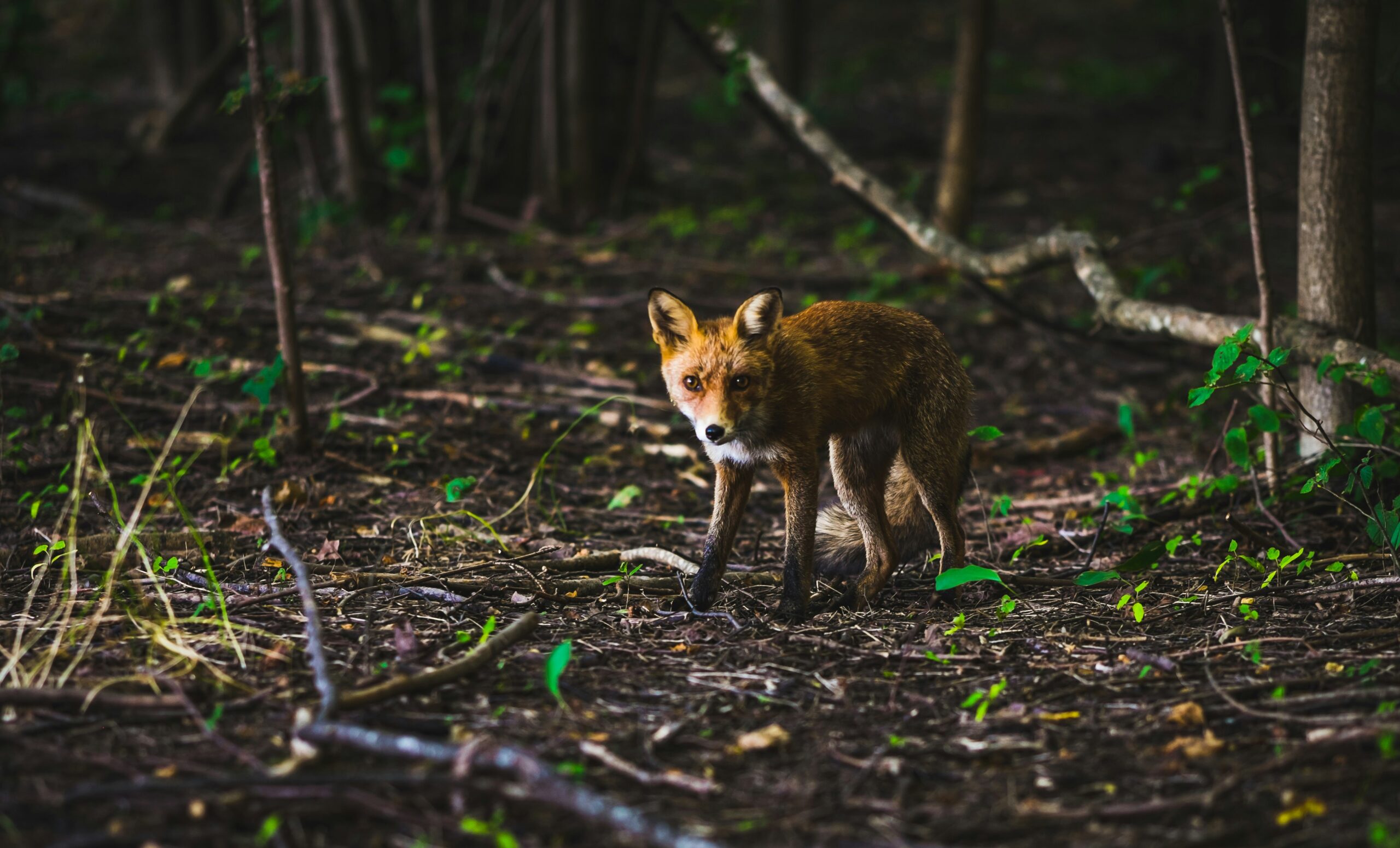
Many people only become aware of foxes after dark.
A fox may suddenly appear in a garden, cross a quiet street, or be heard calling during the night. This often leads people to wonder why foxes seem to become active only after sunset.
While foxes are capable of being active during the day, they are generally most active during the evening, night, and early morning hours.
Understanding why foxes prefer these times can help explain many common encounters with urban foxes.
Why Are Foxes More Active at Night? (Quick Answer)
Foxes are more active at night because darkness helps them avoid people, move safely through their territory, search for food, and communicate with other foxes. Although foxes are not strictly nocturnal, they are most active between dusk and dawn, particularly in towns and cities where human activity is highest during the day.
Are Foxes Nocturnal?
Foxes are often described as nocturnal, but this is not entirely accurate.
They are more properly considered:
- nocturnal
- crepuscular (active at dawn and dusk)
- opportunistic
This means foxes adjust their activity patterns according to their environment.
In urban areas, foxes are often most active after dark because this reduces contact with people and traffic.
In quieter rural areas, foxes may be seen more frequently during daylight hours.
Why Do Foxes Prefer the Night?
Several factors make nighttime activity beneficial.
Reduced Human Disturbance
One of the main advantages of darkness is reduced human activity.
At night there are generally:
- fewer people outdoors
- less garden activity
- reduced disturbance
- fewer vehicles on many roads
This allows foxes to move around more confidently.
Urban foxes have adapted particularly well to taking advantage of these quieter conditions.
Easier Movement Through Territory
Foxes spend much of their active time travelling.
They may move between:
- feeding areas
- resting sites
- territorial boundaries
- den locations
Travelling after dark often reduces the risk of disturbance and allows foxes to use familiar routes more efficiently.
Many urban foxes repeatedly follow established pathways within their territory. Why do foxes follow the same route every night? explores how these movement patterns develop and why they often appear so predictable.
Better Opportunities to Find Food
Foxes are opportunistic feeders.
Nighttime activity allows them to search for:
- insects
- worms
- fallen fruit
- food waste
- small mammals
Urban environments can provide numerous feeding opportunities after dark.
Because many food sources are discovered through experience, foxes often revisit locations that have been rewarding in the past.
How Do Foxes See in the Dark?
Foxes have excellent low-light vision.
Their eyes are well adapted to conditions around dawn, dusk, and nighttime.
This allows them to:
- detect movement
- navigate obstacles
- locate prey
- move efficiently through unfamiliar terrain
Although foxes cannot see perfectly in complete darkness, they are far better equipped for low-light conditions than humans.
Foxes’ excellent low-light vision is one of the reasons they are so well adapted to life after sunset. Can foxes see in the dark? explains how their eyesight helps them navigate, forage, and avoid obstacles in low-light conditions.
Their hearing and sense of smell also play important roles when visibility is limited.
Why Are Foxes Heard More Often at Night?
Many people hear foxes more frequently than they see them.
This is partly because foxes often communicate while they are active.
Common vocalisations include:
- barks
- screams
- contact calls
- territorial calls
Nighttime conditions also allow sounds to travel further, making fox vocalisations more noticeable.
Foxes become particularly vocal during the breeding season when communication between individuals increases. Why do foxes bark at night? explains one of the most commonly heard fox sounds in urban areas.
Are Foxes Active All Night?
Not usually.
Foxes do not remain constantly active from dusk until dawn.
Instead, they alternate between periods of activity and rest.
A fox may:
- search for food
- patrol territory
- rest briefly
- resume activity later
Activity levels vary according to:
- season
- weather
- food availability
- breeding behaviour
This is one reason sightings can occur at different times throughout the night.
Do Foxes Ever Come Out During the Day?
Yes.
Daytime sightings are perfectly normal.
Foxes may be active during daylight when:
- feeding cubs
- food is readily available
- disturbance is low
- weather conditions are favourable
Seeing a fox during the day does not automatically indicate illness or abnormal behaviour.
In many cases, the fox is simply carrying out normal daily activities.
Where do foxes go during the day in the UK? explains where foxes typically rest between periods of activity.
Does the Time of Year Affect Fox Activity?
Yes.
Seasonal changes can influence when foxes are seen.
Winter
During winter:
- breeding season occurs
- vocal activity increases
- foxes may travel further in search of mates
This often leads to more noticeable nighttime behaviour.
Spring
Adult foxes spend considerable time gathering food for cubs.
Activity levels may increase around den sites.
Summer and Autumn
Young foxes become more independent and begin exploring larger areas.
Dispersal and territorial changes may affect movement patterns.
Are Nighttime Fox Visits a Cause for Concern?
Usually not.
Nighttime activity is a normal part of fox behaviour.
Most foxes seen after dark are simply:
- travelling through territory
- searching for food
- communicating with other foxes
- moving between resting locations
Repeated sightings do not necessarily indicate a problem.
However, gardens that provide food or shelter may attract more frequent visits.
Understanding why foxes are active at night can help place these encounters into context.
Common Questions
Why do foxes only come out at night?
Foxes do not only come out at night, but they are usually most active after dark because conditions are quieter and safer.
Is it normal to see a fox during the day?
Yes. Daytime sightings are common and do not automatically indicate illness.
Why are foxes noisy at night?
Foxes often communicate while active, particularly during the breeding season.
What time are foxes most active?
Activity typically increases around dusk, continues through the night, and often peaks during the early morning hours.
Do foxes sleep all day?
Foxes usually spend much of the day resting, although they may occasionally become active during daylight.
Why do foxes visit gardens at night?
Gardens can provide food, shelter, water, and safe travel routes that fit into a fox’s nightly routine.
Key Takeaways
- Foxes are most active between dusk and dawn.
- Nighttime activity helps reduce contact with people and disturbance.
- Darkness provides safer conditions for travelling and foraging.
- Foxes use a combination of vision, hearing, and smell to navigate at night.
- Vocalisations are often more noticeable after dark.
- Daytime sightings are normal and do not necessarily indicate illness.
- Seasonal changes can influence when foxes are most active.
Sources and Further Guidance
- The Mammal Society – Overview of red fox behaviour, ecology, activity patterns, and adaptation to urban environments.
- The Wildlife Trusts – Species information covering fox behaviour, feeding habits, habitat use, and activity patterns.
- RSPCA – Guidance on understanding urban fox behaviour and living alongside foxes responsibly.
- MammalWeb – Information on fox ecology, behaviour, territory use, and daily activity.
- Wildlife Online – Detailed discussion of fox behaviour, movement, territoriality, and activity patterns.
- Natural England – General guidance on responsible coexistence with British wildlife.
For more guidance on living alongside foxes, visit our fox guidance hub, where you can explore behaviour, prevention strategies, and UK wildlife law.
0 responses to “Why Are Foxes More Active at Night?”